2026 Best RF Coaxial Connector Types for Global Buyers?
Choosing the right Rf Coaxial Connector in 2026 requires more than comparing catalog prices. Global buyers now evaluate impedance, frequency range, insertion loss, shielding, durability, and certification together. A connector may look identical on a purchasing screen. Inside a cabinet, its performance can differ sharply.
MarketsandMarkets’ recent RF connector research identifies telecommunications, automotive radar, aerospace, and test equipment as major growth areas. Its analysis also highlights rising demand for high-frequency, miniaturized, and low-loss connector designs. Grand View Research reports similar momentum across RF component markets, driven by 5G infrastructure, satellite communications, and advanced wireless devices. These trends are practical, not abstract. A poorly matched connector can create reflected power, unstable measurements, or visible signal loss on a crowded production line.
Dr. David M. Pozar, a recognized microwave-engineering authority, explains, “The reflection coefficient is a measure of the mismatch between the load and the line.” That principle remains central when comparing SMA, N-type, BNC, TNC, MCX, MMCX, and newer millimeter-wave options. No connector wins everywhere. Small parts matter. Buyers must also check mating cycles, cable compatibility, environmental sealing, and regional supply stability. This guide is not flawless, because connector performance depends on installation quality and application details. Still, it offers a structured starting point for engineers, distributors, and procurement teams seeking reliable 2026 options. A datasheet is useful. A torque wrench is better.
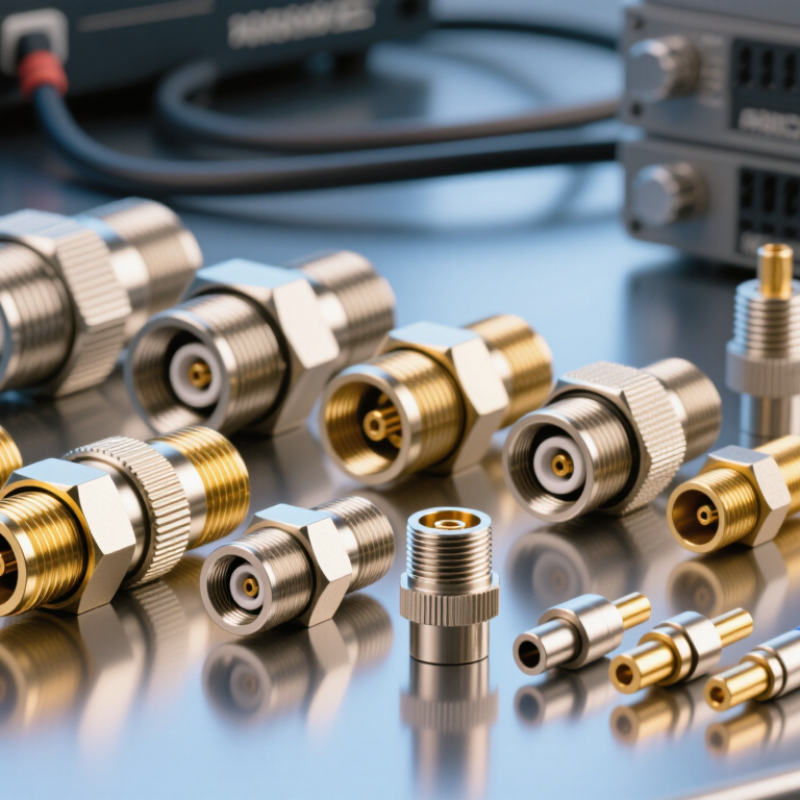
RF Coaxial Connectors: Definition, Structure, and Core Functions
RF coaxial connectors are precision interfaces for joining coaxial cables, antennas, and radio-frequency equipment. They preserve a controlled path for high-frequency signals. Unlike ordinary electrical plugs, their geometry directly affects impedance, shielding, and signal stability. A typical connector contains a center pin, dielectric insulator, outer conductor, and protective housing. The center pin carries the signal. The dielectric keeps spacing consistent. The outer conductor provides a return path and blocks electromagnetic interference.
Common connector types include threaded, bayonet-lock, snap-on, and push-on designs. Threaded connections usually resist vibration better. Push-on styles support faster installation and removal. Selection depends on frequency range, cable size, installation space, mating cycles, and environmental exposure. At high frequencies, even a small dimensional error can increase reflection. A connector may look perfect and still perform poorly.
In practical procurement, buyers should request verified impedance, operating frequency, insertion loss, return loss, and voltage ratings. They should also check plating quality, contact retention, and cable compatibility. Use a calibrated network analyzer when performance matters. Field testing often reveals problems that product sheets do not show, especially after repeated mating or temperature changes. Do not judge quality by appearance alone. Specifications are essential, but they are not the whole answer. A carefully selected connector can still fail after careless assembly. That limitation deserves attention.
How to Match Connector Types with RF Applications
2026 Best RF Coaxial Connector Types for Global Buyers?
How to Match Connector Types with RF Applications
Choosing an RF coaxial connector starts with the application, not its appearance. The connector must match frequency, impedance, power, cable size, and installation conditions. Most RF systems use 50-ohm connectors, while video networks often require 75-ohm designs. Mixing them can increase signal reflection and weaken performance.
For compact equipment, SMA connectors suit many high-frequency assemblies and test cables. N-type connectors provide stronger outdoor protection against moisture and vibration. BNC connectors allow quick attachment on laboratory instruments and monitoring equipment. TNC connectors offer threaded coupling where movement is expected. Inside small wireless devices, MCX or MMCX connectors save space, but their smaller bodies need careful handling. Do not assume a compact connector is automatically suitable.
Field experience shows that mechanical details matter. Check the cable diameter before ordering; an incorrect clamp can create stress near the contact. Verify the operating frequency with a reliable specification sheet. Then test the finished assembly using a vector network analyzer, especially above several gigahertz. Proper torque also matters. A loose connection may pass a basic continuity check and still produce unstable insertion loss.
I have seen selection tables overlook mating cycles and cleaning access. That mistake becomes expensive during maintenance. Environmental sealing, panel thickness, and connector gender deserve equal attention. The best choice is sometimes less convenient to install, but more stable after repeated servicing.
2026 Best RF Coaxial Connector Types for Global Buyers
How to match connector types with RF applications based on representative upper operating frequency.
SMA and 2.92 mm connectors are commonly selected for higher-frequency laboratory, test, and microwave systems. N and TNC connectors are often used for rugged general-purpose RF links, while BNC is suitable for lower-frequency instrumentation and control applications. Actual performance depends on the connector version, cable assembly, mating quality, and installation conditions.
Global Standards, Materials, and Performance Requirements
For global buyers, the best RF coaxial connector depends on standards, frequency, and installation conditions. The IEC 61169 series provides a useful reference for connector dimensions and interfaces. Yet, a compliant design may still fail in a high-vibration cabinet. Check the required impedance, usually 50 or 75 ohms, before comparing prices. Threaded interfaces suit harsh environments, while snap-on types support faster field assembly. Every drawing should state mating dimensions, test methods, and allowable tolerances.
Material selection directly affects reliability. Brass offers practical conductivity and cost control. Stainless steel withstands corrosion, salt exposure, and repeated handling. Beryllium copper can improve spring contact performance, but it requires controlled manufacturing and responsible material documentation. PTFE supports stable insulation across many RF applications, while higher-temperature polymers may suit demanding assemblies. Plating also matters. Nickel resists wear, gold supports stable contact resistance, and silver can perform well at high frequencies when protected properly. Do not judge plating by appearance alone.
Performance testing should include return loss, insertion loss, shielding effectiveness, power handling, and cable retention. Test results must cover the intended frequency range, temperature cycle, humidity, and vibration profile. In field inspections, a connector can look perfect while a loose center contact causes intermittent loss. That is an expensive lesson. Ask for traceable inspection records, material declarations, and sample-based validation. A catalog rating is useful, but real assemblies often behave differently. Leave room for design review.
Selection Factors for International Buyers in 2026
2026 Best RF Coaxial Connector Types for Global Buyers
Selection Factors for International Buyers in 2026
International buyers should select RF coaxial connectors by application, not popularity. Start with system frequency, impedance, power level, and cable construction. A 50-ohm connector suits most wireless and test systems. A 75-ohm type often supports video and broadband infrastructure. Mixing interfaces can create signal loss and costly rework.
Check insertion loss, return loss, voltage standing wave ratio, and shielding performance. These figures should match the operating frequency, not only the connector’s maximum rating. Cable diameter also matters. A connector designed for a thin cable may fail mechanically on a thicker assembly. Small details matter.
Environmental conditions deserve equal attention. Outdoor installations may require sealing, corrosion resistance, temperature stability, and an appropriate protection rating. Ask for material declarations, test reports, batch traceability, and production consistency. Local import rules may also require specific safety or chemical compliance documents.
Request samples before placing a large order. Test mating force, torque, pull strength, and repeated connection performance. Inspect plating under magnification. It can reveal uneven coverage or damaged edges.
A datasheet is not the whole truth.
Packaging and logistics affect reliability too. Moisture barriers, protective caps, clear labels, and multilingual documents reduce receiving errors. Delivery promises should include production capacity and inspection timing. The cheapest option may become expensive after field failures. Yet premium pricing alone proves nothing. Independent testing remains necessary.


