Let’s discuss your container requirements
01708 225350
Call Us
sale@modularmarbles.com
Email Us

2026 Top Small Shipping Containers for Global Buyers

Global buyers need practical answers when choosing small shipping containers in 2026. Space, transport cost, security, and local handling conditions all matter. A six-foot unit may fit a garden, workshop, or narrow delivery route. However, it may not meet every port’s handling requirements.

UNCTAD’s Review of Maritime Transport reports that more than 80% of global merchandise trade moves by sea. That figure explains the container’s continuing importance. The World Bank’s Logistics Performance Index also shows how customs, infrastructure, tracking, and delivery reliability affect supply-chain results. Yet these reports rarely separate small shipping containers from standard equipment. That gap deserves attention. No ranking is perfect.

Marc Levinson, an economic historian and shipping-industry authority, wrote, “The container made the world smaller and the world economy bigger.” His observation still fits today’s smaller units. They serve buyers who need compact storage, flexible delivery, or lower initial capacity. Still, the cheapest box can become expensive after crane fees, inland transport, repairs, and modifications.

This guide compares leading options for global buyers. It considers usable dimensions, steel quality, door design, weather resistance, ventilation, locking systems, and delivery access. Buyers should also verify ISO compatibility, CSC requirements where applicable, and regional import rules. A container with fresh paint may look ready. Rust beneath the floor can tell another story.

The strongest choice is not always the smallest one. Measure the site, cargo, route, and total landed cost before ordering.
2026 Top Small Shipping Containers for Global Buyers

What Defines a Small Shipping Container in 2026

What Defines a Small Shipping Container in 2026

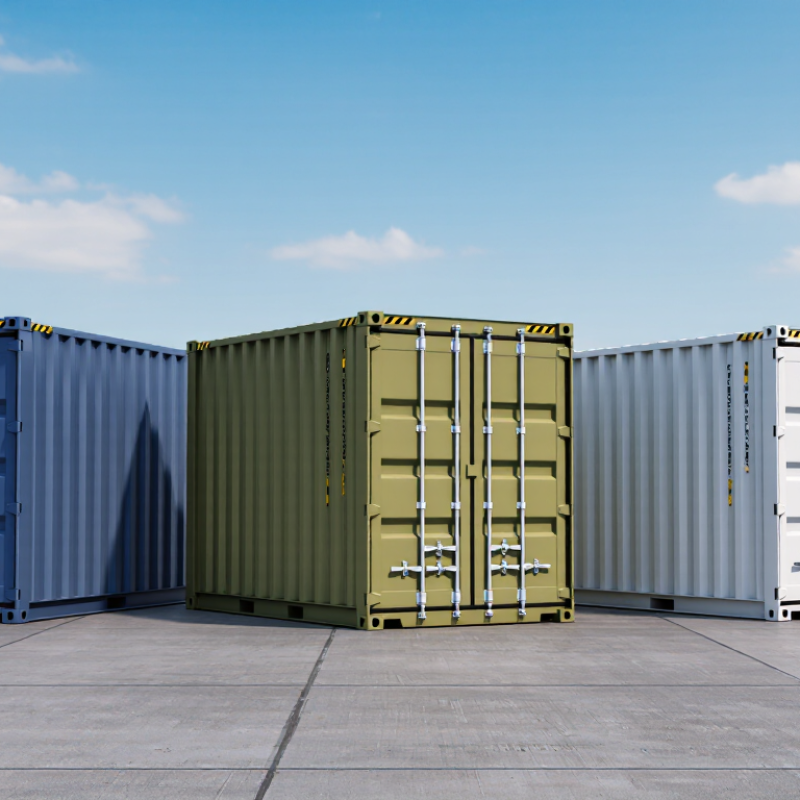
In 2026, a small shipping container usually means a unit shorter than the common 20-foot model. Popular sizes include 6-foot, 8-foot, and 10-foot lengths, while widths often remain close to 8 feet. Internal measurements matter more than advertised dimensions. A 10-foot container may provide about 9 feet of usable floor length after wall panels and door hardware are installed.

The definition is not completely standard. Some suppliers describe compact storage units as shipping containers, although they may not be certified for international sea transport. Global buyers should check the construction plate, corner fittings, floor capacity, and certification documents. A reliable seller should provide external and internal dimensions, tare weight, maximum payload, door opening size, and steel thickness. Ask for recent inspection photographs. Small details matter.

A practical example is a buyer storing two pallets, hand tools, and seasonal equipment. The pallet width may fit, but the door frame can reduce loading clearance. Forklift access also changes the decision. Ventilation openings help reduce condensation, yet they do not solve every moisture problem. I have seen buyers focus on length and overlook roof height. That mistake is expensive to correct after delivery. Paint quality, floor treatment, drainage, and local delivery access deserve equal attention. The term “small” sounds simple, but its real meaning depends on use, construction, and transport requirements.


2026 Top Small Shipping Containers for Global Buyers

What Defines a Small Shipping Container in 2026?

Small shipping containers are generally selected below the standard 40-foot format. The chart compares common nominal lengths using typical internal volume figures. Actual dimensions may vary slightly according to wall thickness, door configuration, flooring, and container specification. Standard shipping containers are generally about 2.44 meters wide and 2.59 meters high externally.

Key Types and Sizes for Global Buyers

2026 Top Small Shipping Containers for Global Buyers

Small shipping containers are gaining attention as cargo volumes become more fragmented. UNCTAD’s Review of Maritime Transport 2024 states that ships carry over 80% of global merchandise trade by volume. For buyers, the container’s footprint matters as much as its capacity.

The 8-foot container suits tools, spare parts, and short-term storage. It fits narrow yards and can enter many industrial doorways.

A 10-foot container offers more practical floor space without requiring a full-size trailer. Its typical internal length is about 2.8 meters, though manufacturers vary slightly.

The 20-foot container remains the international workhorse, with roughly 33 cubic meters of internal volume. ISO 668 provides the core dimensional framework for standard freight containers.

Dry containers handle general cargo. Refrigerated units protect temperature-sensitive goods, but they require power and stricter maintenance checks. Open-top containers help with tall machinery, while side-opening designs improve access for pallets. Small does not mean simple.

Buyers should verify external dimensions, door openings, tare weight, payload, corner fittings, and floor condition. A “10-foot” label may hide different internal measurements. That causes trouble.

The 2024 Drewry Container Census also shows how large and standardized the global container fleet has become, but smaller units remain less uniform across markets. Request recent inspection photos, CSC plate details, and loading diagrams before payment. Sea freight is efficient, yet poor size planning can waste space, increase handling, and damage cargo.

Materials, Construction, and Performance Standards

Small shipping containers must be judged by construction, not appearance. For global buyers, corrosion-resistant steel remains the practical choice for sidewalls, doors, and corner posts. Marine-grade plywood can provide a durable floor, but moisture protection still matters. A slightly uneven floor is not cosmetic. It can shift cargo during handling.

ISO 668 defines standard container dimensions, while ISO 1496-1 covers structural tests for stacking, lifting, and floor strength. Buyers should request the container’s inspection records and CSC safety plate before shipment. The plate confirms approved operating limits. It does not guarantee perfect condition. That distinction is often missed.

UNCTAD’s Review of Maritime Transport 2024 states that more than 80% of global merchandise trade moves by sea. Small units therefore face repeated lifting, vibration, salt air, and temperature changes. The World Bank’s 2023 Logistics Performance Index also shows that tracking and shipment reliability remain uneven across markets. Strong door seals, protected hinges, sound welds, and clearly marked payload limits reduce avoidable problems. Short containers are easier to place in tight areas, but their compact size can tempt buyers to overload them. That assumption needs challenging. A careful pre-shipment inspection is still wiser than a low headline price.

How to Compare Prices, Features, and Suppliers

2026 Top Small Shipping Containers for Global Buyers

How to Compare Prices, Features, and Suppliers

For global buyers, price comparison should begin with landed cost, not listing price. A compact container may look affordable at the factory gate. Freight, inland delivery, insurance, customs handling, and local taxes can change the final figure sharply. Ask for an itemized quotation with currency, validity period, and delivery term. I have seen a low quote become expensive after port charges appeared. That mistake is easy to repeat.

Features should match the cargo and handling route. Check external dimensions, internal clearance, tare weight, door opening, floor condition, ventilation, and corrosion protection. A 10-foot unit may fit a narrow site, yet provide less usable volume than expected. Inspect welds, corner castings, gasket seals, and locking bars through dated photos or an independent inspection. Details matter. Ask whether the unit is new, refurbished, or previously used. Some suppliers describe repairs too generously. Request a written condition grade and clear acceptance criteria.

Supplier quality requires evidence, not polished messages. Verify company registration, export experience, inspection records, spare-part support, and references from comparable markets. Compare response time and document accuracy, especially packing lists and dimensions. Confirm payment stages and the remedy for damage before dispatch. I prefer a sample order when possible, although it raises the average cost. My comparison sheets are never perfect; exchange rates and seasonal freight can shift quickly. Prices move. Recheck every figure before signing, and confirm the container meets destination transport and import requirements.

International Shipping, Compliance, and Buying Factors

2026 Top Small Shipping Containers for Global Buyers

International Shipping, Compliance, and Buying Factors

Small shipping containers, usually six, eight, or ten feet long, suit compact cargo and limited sites. Their size reduces storage costs, but international movement still requires careful planning. A container that looks suitable may not meet ocean-transport requirements. Ask for verified dimensions, tare weight, maximum payload, door measurements, and corrosion photographs. Request the manufacturing date and inspection records. Paint can hide damage.

For sea transport, confirm whether the unit carries a valid safety approval plate and inspection status. Requirements vary by route, port, and destination country. Check the correct HS classification with a licensed customs professional before payment. Commercial invoices, packing lists, certificates of origin, and transport documents must match the cargo details. Small errors can cause delays. I would not rely on a seller’s informal customs promise.

Incoterms also deserve attention. Clarify who pays freight, insurance, destination handling, duties, taxes, and port storage. A low purchase price may become expensive after demurrage and inland delivery. Measure the unloading area carefully, including gate width, turning space, and crane clearance. Some destinations require permits for placement, conversion, or long-term storage. Wooden packing materials may need approved treatment and marking. Ask for written answers, not vague assurances. My own buying checklist would still leave room for doubt, because port practices and local rules can change.

2026 Top Small Shipping Containers for Global Buyers - International Shipping, Compliance, and Buying Factors

Container Type Typical External Dimensions
(L × W × H)
Approximate Internal Volume International Shipping Suitability Typical Use Key Buying Consideration
6 ft compact container Approx. 1,830 × 2,438 × 2,591 mm About 8–10 m³ Usually unsuitable for standard ocean carriage unless specifically certified and accepted by the carrier or terminal. Local storage, tools, equipment, and short-distance transport. Confirm lifting points, securing method, corner fittings, and whether a valid CSC plate is provided.
8 ft compact container Approx. 2,438 × 2,438 × 2,591 mm About 11–13 m³ Often used for domestic or regional movement; international acceptance depends on certification and carrier policy. Small commercial inventory, construction materials, and household storage. Check whether the unit is ISO-compatible, stackable, and accepted at the destination port.
10 ft standard dry container Approx. 2,991 × 2,438 × 2,591 mm About 15.9 m³ The most practical small format for international freight when an ISO-compliant unit and valid CSC approval are available. General cargo, machinery, spare parts, retail stock, and project shipments. Verify internal dimensions, tare weight, payload, door condition, and carrier acceptance before purchase.
10 ft high-cube container Approx. 2,991 × 2,438 × 2,896 mm About 17.5–18 m³ International use is possible only when the specific unit meets applicable ISO and CSC requirements. Bulky but lightweight cargo, tall packaging, and volume-sensitive shipments. Confirm terminal height restrictions, inland road clearance, and equipment availability at both ends.
10 ft open-top container Approx. 2,991 × 2,438 × 2,591 mm Usually close to 15 m³, depending on the roof design Suitable for approved oversized or top-loaded cargo when accepted by the carrier. Stone, scrap, machinery, timber, and cargo that cannot be loaded through standard doors. Budget for special handling, weatherproof tarpaulin protection, and possible out-of-gauge charges.
10 ft refrigerated container Approx. 2,991 × 2,438 × 2,591 mm; dimensions vary by refrigeration system Typically lower than a dry unit, often around 12–14 m³ Requires carrier approval, electrical power, temperature monitoring, and specialized reefer handling. Temperature-sensitive food, pharmaceuticals, chemicals, and biological materials. Check power requirements, temperature range, service history, insulation condition, and data-logging capability.
20 ft standard dry container benchmark Approx. 6,058 × 2,438 × 2,591 mm About 33.2 m³ Widely accepted for international ocean and intermodal transport. A comparison option when a 10 ft unit has higher freight or handling costs. Compare total landed cost because a larger unit may offer better freight economics per cubic metre.

International Compliance and Documentation Checklist

Compliance Area What to Verify Before Purchase or Shipment Why It Matters
CSC approval Check the safety approval plate, identification number, manufacture date, maximum gross mass, stacking load, and next examination information. A valid safety approval is generally required for containers used in international transport.
ISO compatibility Confirm dimensions, corner fittings, lifting points, and handling specifications against the carrier and terminal requirements. Non-standard compact units may be rejected or require special handling.
Cargo weight and verified gross mass Record cargo weight, packaging weight, and container tare weight; submit the verified gross mass according to the shipping process. Incorrect weight declarations can cause loading delays, penalties, or safety risks.
Customs paperwork Prepare a commercial invoice, packing list, transport document, HS classification, country of origin, and any required import or export permits. Documentation requirements, duties, taxes, and restricted-goods rules differ by destination.
Wood packaging Use compliant treated and marked wood packaging where required by the destination country. Untreated wood pallets, crates, or dunnage may be refused, destroyed, or re-exported.
Dangerous goods Classify hazardous materials correctly and provide the required declaration, packaging, labels, and handling instructions. Incorrect declarations may result in refusal, fines, cargo seizure, or serious safety incidents.
Inspection and condition Inspect the floor, roof, doors, seals, welds, corner posts, odour, water-tightness, and corrosion before acceptance. Structural or water-ingress problems can damage cargo and create unexpected repair costs.

Key Buying Factors for Global Buyers

Factor Recommended Evaluation Method
Total landed cost Add purchase price, inland transport, port handling, ocean freight, customs charges, duties, taxes, inspection, storage, and final delivery.
Usable capacity Measure internal length, width, height, door opening, and floor loading rather than relying only on nominal container size.
Loading and unloading Confirm forklift access, ramp requirements, crane capacity, delivery-road restrictions, and site turning space.
Condition grade Request recent photographs, inspection records, repair history, door-seal condition, and a water-tightness test where appropriate.
Trade route availability Obtain written confirmation that the selected size can be accepted at the origin port, transshipment ports, destination port, and inland carrier network.
Warranty and after-sales support Define coverage for structural defects, roof leaks, doors, refrigeration equipment, delivery damage, and replacement parts.

Note: Dimensions, volume, tare weight, payload, and certification status vary by manufacturer, production year, repair history, and local regulations. Confirm the container specification and carrier acceptance in writing before booking international transport.

We are proud to support

Registered Company Name: Upminster Containers Limited. Registered Address: Mardyke Works, St Mary's Lane, Upminster, Essex RM14 3PA. Registered Company Number: 00940382
Developed & Maintained By Space Rocket Digital.
chevron-down