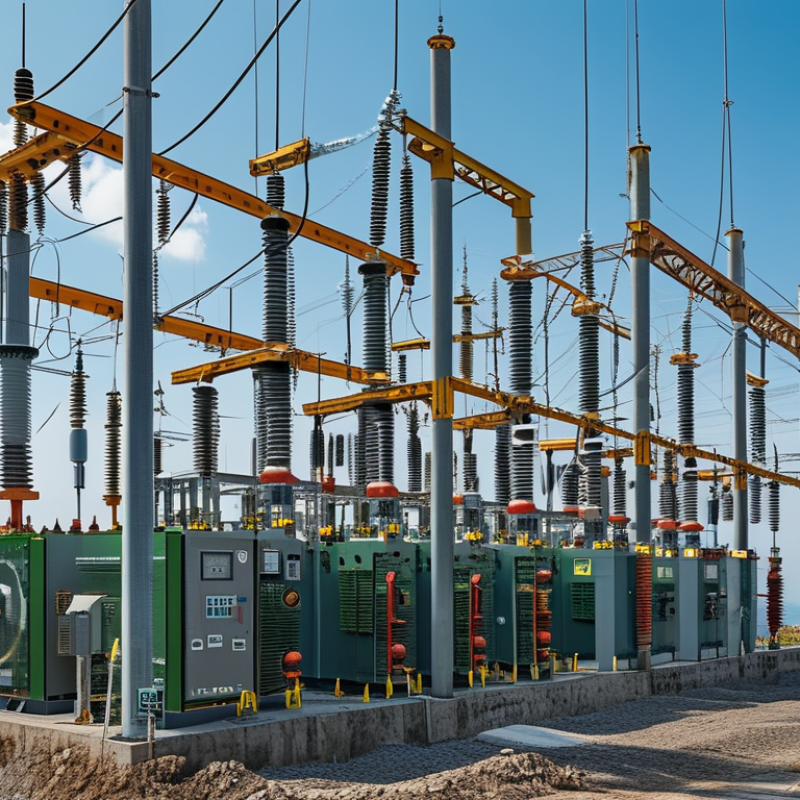
Choosing the China Best Substation With Transformer Supplier requires more than comparing prices or factory photographs. A reliable supplier should understand voltage levels, load profiles, climate exposure, protection systems, and installation conditions. The right partner connects transformer design with the complete substation package. This reduces interface risks during commissioning. It also supports safer, more predictable operation.
Good decisions begin with evidence. Look for audited quality systems, relevant certifications, documented factory testing, and references from comparable projects. Ask for test reports, not polished promises. Experienced manufacturers should explain core materials, winding methods, insulation systems, cooling arrangements, and enclosure protection clearly. They should provide drawings, technical data sheets, routine test results, and a realistic production schedule. Independent inspection can add confidence before shipment.
Site support matters too. A supplier may offer installation guidance, relay coordination assistance, operator training, and spare-parts planning. These services become valuable when a transformer reaches a remote site, where one small delay can stop a major project. Communication quality is another practical test. Can engineers answer precise questions without avoiding difficult details?
There is no universal best supplier. Project conditions differ. A coastal substation needs different protection than a dry inland facility. Budget pressure can also distort careful selection. That weakness deserves attention. Buyers should compare total ownership cost, not only the purchase price. They should verify warranty terms, response times, and service coverage in writing. This guide presents a balanced approach to evaluating Chinese suppliers. It recognizes strong manufacturing capability while leaving room for independent verification. The goal is simple: choose equipment that performs reliably after delivery, not merely equipment that looks impressive in a quotation.
A substation with transformer is a facility that changes electrical voltage for safe transmission or local distribution. It receives power through incoming high-voltage lines. The transformer then reduces or increases voltage for a specific network. Switchgear, busbars, circuit breakers, and protection relays control this process. Grounding systems help guide fault currents safely into the earth. That is the core.
In practical projects, engineers select transformer capacity according to load demand, future expansion, and site conditions. A factory may need stable medium-voltage power for motors and production equipment. A utility substation may serve thousands of homes through several outgoing feeders. Salt air, dust, flooding, and heat can affect equipment life. Site conditions matter.
During inspections, technicians check oil temperature, winding condition, connections, insulation, and relay operation. They also review test reports and maintenance records. Small weaknesses grow. No design is perfect. Load forecasts can be wrong, especially when new buildings or machines appear. A reliable supplier should provide clear drawings, factory testing, installation guidance, and long-term service support. Good communication matters as much as equipment quality.
China Best Substation With Transformer Supplier?
Key Types of Substations and Their Main Applications
Substations control voltage, protect equipment, and keep electricity moving safely. Their design depends on load size, location, climate, and maintenance access. Transmission substations handle high-voltage power between generating stations and regional networks. They usually include power transformers, circuit breakers, protection relays, and monitoring systems. Distribution substations reduce voltage for factories, offices, and residential areas. A small urban unit may supply several streets, while a larger station serves an industrial zone.
Step-up substations raise voltage near power plants. Higher voltage reduces transmission losses across long distances. Step-down substations lower voltage before electricity reaches local users. Indoor substations suit dense cities and harsh environments. Outdoor substations often provide easier expansion and inspection. Gas-insulated designs save space, but they require specialized servicing and careful fault analysis. The choice is not always obvious. Site conditions can challenge a standard design.
Tips: Check transformer capacity, cooling performance, insulation levels, and short-circuit ratings. Request factory test records and protection settings. Confirm spare parts availability and technician response times. A supplier should explain maintenance intervals in clear language. Ask for drawings that match the actual installation, not a generic template. I have seen projects suffer when cable routes and access space were reviewed too late. Local regulations and grid requirements also need verification before equipment production.
| Substation Type | Typical Voltage Role | Primary Function | Main Applications | Common Transformer Arrangement | Typical Switching Equipment | Key Design Priorities |
|---|---|---|---|---|---|---|
| Step-Up Substation | Generation voltage to transmission voltage | Increases generator output voltage so electricity can be transmitted over long distances with lower current and reduced line losses. | Power plants, renewable-energy generation sites, hydroelectric stations, thermal stations, and utility-scale battery projects. | Generator step-up transformers, commonly with high-voltage bushings and on-load or off-circuit tap changers as required. | Generator circuit breakers, disconnectors, grounding switches, current transformers, voltage transformers, and surge arresters. | Short-circuit withstand, insulation coordination, synchronization, cooling capacity, fire protection, and grid-code compliance. |
| Step-Down Substation | Transmission voltage to distribution voltage | Reduces high transmission voltage to a level suitable for regional distribution networks and large industrial users. | Utility transmission networks, regional grid supply points, industrial zones, and metropolitan load centers. | Power transformers with high-voltage and medium-voltage windings; tap-changing equipment is often used for voltage regulation. | High-voltage circuit breakers, busbars, disconnectors, protection relays, instrument transformers, and surge protection. | Load growth, transformer redundancy, voltage stability, fault clearing, noise control, and access for maintenance. |
| Distribution Substation | Medium voltage to low voltage | Supplies electricity to local commercial, residential, agricultural, and small industrial consumers. | Urban neighborhoods, rural networks, commercial buildings, schools, hospitals, and light-manufacturing facilities. | Distribution transformers, often oil-immersed outdoors or dry-type indoors, with ratings selected for local demand. | Medium-voltage switchgear, reclosers, fuses, low-voltage panels, surge arresters, and feeder protection devices. | Reliability, compact footprint, public safety, voltage quality, easy maintenance, and accommodation of changing loads. |
| Collector Substation | Multiple collection feeders to grid interconnection voltage | Combines power from several generation feeders and transfers it to a transmission or sub-transmission network. | Solar photovoltaic parks, wind farms, hybrid renewable-energy plants, and large distributed-generation projects. | Medium-voltage collector transformers, main step-up transformers, and auxiliary service transformers. | Medium-voltage collector switchgear, feeder breakers, protection relays, metering, communications, and grid-interconnection equipment. | Variable generation, harmonic performance, reactive-power control, grounding, weather resistance, and remote monitoring. |
| Traction Substation | Utility supply to railway traction voltage | Converts and distributes electrical power for railway propulsion systems and associated railway equipment. | Electric railways, metros, light-rail systems, high-speed rail lines, and railway maintenance facilities. | Traction transformers, rectifier transformers, or specially configured transformers matched to AC or DC traction systems. | AC or DC switchgear, rectifiers, feeder breakers, return-current systems, protection relays, and disconnectors. | High cyclic loads, voltage fluctuation, stray-current control, electromagnetic compatibility, passenger safety, and availability. |
| Industrial Substation | Utility voltage to plant distribution voltage | Provides dedicated electrical supply, voltage transformation, and protection for energy-intensive industrial processes. | Steel plants, chemical facilities, mining operations, cement plants, data centers, and large manufacturing sites. | Power transformers, furnace transformers, rectifier transformers, or dry-type transformers depending on the process load. | Metal-enclosed switchgear, motor-control centers, bus ducts, variable-frequency-drive interfaces, and advanced protection systems. | Process continuity, high inrush currents, harmonics, arc-flash mitigation, selective coordination, and maintenance planning. |
| Mobile Substation | Temporary transmission or distribution service | Restores or supplements electrical service when a permanent substation is unavailable, overloaded, or under maintenance. | Emergency restoration, planned outages, disaster recovery, temporary construction loads, and network expansion projects. | Transportable power transformer with integrated switchgear, protection, control, and auxiliary systems. | Compact high-voltage and medium-voltage switchgear, cable connections, protection relays, grounding equipment, and control panels. | Transport dimensions, rapid deployment, safe connection procedures, environmental protection, mechanical robustness, and interoperability. |
| Indoor Substation | Usually medium voltage and selected high-voltage applications | Contains electrical equipment inside a building to protect it from weather, pollution, unauthorized access, or space limitations. | Dense urban areas, commercial complexes, underground facilities, factories, data centers, and high-value infrastructure. | Dry-type transformers are common where fire safety and indoor installation are priorities; sealed oil units may also be used with suitable provisions. | Metal-clad switchgear, gas-insulated switchgear, low-voltage distribution boards, protection relays, and monitoring systems. | Ventilation, fire resistance, noise, clearances, access routes, arc-flash containment, and building-code compliance. |
| Outdoor Substation | Medium voltage to extra-high voltage | Provides open-air transformation, switching, protection, and power-flow control across a broad range of network voltages. | Transmission yards, utility substations, rural distribution networks, generation sites, and industrial campuses. | Outdoor oil-immersed power transformers with radiators, conservators or sealed tanks, bushings, and cooling accessories. | Air-insulated switchgear, circuit breakers, disconnectors, busbars, instrument transformers, surge arresters, and grounding grids. | Lightning protection, pollution level, weather exposure, land use, security, earthing, maintenance clearances, and noise. |
| Gas-Insulated Substation | Medium voltage to extra-high voltage | Uses enclosed insulated switchgear to reduce the footprint and improve protection from environmental conditions. | Urban transmission networks, underground substations, coastal areas, polluted environments, tunnels, and space-constrained sites. | Transformers are installed adjacent to or integrated with the switchgear arrangement; dry-type or oil-immersed units may be selected by project conditions. | Enclosed gas-insulated circuit breakers, disconnectors, earthing switches, busbars, current transformers, and voltage sensors. | Compact layout, gas handling, leak monitoring, lifecycle management, seismic design, installation quality, and specialized maintenance. |
Choosing a reliable substation supplier requires more than comparing prices. Start by checking engineering experience with your voltage level, load profile, climate, and installation conditions. Ask for recent project references, not only polished product photos. A serious supplier should provide clear drawings, protection schemes, material lists, and a realistic production schedule.
Factory verification can reveal important details. Inspect transformer winding areas, copper storage, insulation handling, and final assembly zones. Request routine test records for insulation resistance, winding resistance, ratio, and dielectric performance. For larger projects, witness factory acceptance testing before shipment. Check whether the supplier follows applicable IEC or national standards. Certificates alone are not enough. Traceability matters.
After-sales support deserves equal attention. Confirm response times, spare-part availability, commissioning assistance, and warranty responsibilities in writing. Ask who will solve a relay setting problem at midnight. This question is practical.
A reliable supplier should explain risks instead of hiding them. Lead times may change when special steel, bushings, or control equipment is delayed. That honesty is valuable. Still, do not accept vague promises. Review payment terms, inspection points, packing methods, and delivery responsibilities carefully. An attractive quotation can exclude testing, site support, or replacement parts. That mistake is common. Supplier evaluation should combine technical evidence, factory experience, financial stability, and communication quality before any purchase order is approved.
China Best Substation With Transformer Supplier?
Essential Transformer and Substation Quality Standards
Choosing a transformer and substation supplier requires more than comparing prices. Standards show how equipment should perform under stress. Check compliance with IEC and IEEE requirements, where applicable. Confirm the exact edition used in the technical offer. Standards change. A copied certificate can hide important gaps.
A dependable transformer should have documented routine and type tests. These may include winding resistance, insulation strength, temperature rise, and partial discharge. Ask for factory test records with serial numbers and measured values. Inspect the tank, bushings, cooling system, and oil sealing points. Small oil leaks often become expensive maintenance problems. The substation also needs verified grounding, protection coordination, fire resistance, and enclosure ratings suited to the site.
Request a clear quality plan before production begins. It should define material inspection, welding checks, assembly control, and final testing. Site acceptance testing matters too. Technicians should verify relay settings, cable insulation, control signals, and emergency shutdown functions. I have found that delivery schedules can distract teams from witness testing. That is a weakness. No checklist is perfect. Independent inspection can still miss workmanship hidden beneath paint. Keep traceable records, review nonconformities honestly, and confirm that spare parts and manuals match the installed equipment.
This chart presents selected preferred three-phase transformer rated powers from the IEC 60076-1 rating series. Rated capacity is only one procurement dimension; a complete quality review should also verify routine and type tests, insulation coordination, temperature-rise performance, short-circuit withstand capability, and applicable IEC 60076, IEC 62271, or IEEE C57 requirements.
Reference: IEC 60076-1, Power Transformers — Part 1: General.
Choosing a substation transformer supplier requires more than comparing the lowest quotation. I have seen projects lose time because a cheap offer excluded testing, spare parts, or site support. Request a detailed cost breakdown covering the transformer, protection equipment, installation, shipping, and commissioning.
Price matters, but technical evidence matters more. Review rated capacity, voltage ratio, insulation level, cooling method, noise limits, and short-circuit performance. Ask for routine and type-test records from qualified laboratories. Factory inspections can reveal winding cleanliness, assembly controls, and calibration practices. Photos help, but witnessed testing gives stronger evidence.
Service capability often decides the project outcome. Check the supplier’s engineering team, response time, documentation quality, and experience with similar grid conditions. Ask who handles faults after delivery and how quickly replacement components can be supplied. One overlooked detail is local technical training; operators need clear manuals and practical guidance. I once underestimated spare-parts planning, and the delay was avoidable. Not every supplier presents information equally well. Compare written evidence, not confident promises. A capable supplier should explain limitations openly and adjust the design when site data changes.