A Zirconium Ring can look understated in a display case, then feel surprisingly substantial on your hand. Choosing well takes more than judging its color. Check the band’s width, edge shape, interior comfort, surface finish, and the maker’s care instructions. Small details matter.
The U.S. Geological Survey’s 2024 Mineral Commodity Summaries estimated global zirconium-mineral-concentrate production at about 1.5 million metric tons in 2023. That figure describes a broader raw-material supply, not ring production or jewelry quality. It is useful context, but it cannot tell you whether a particular band is well made. Materials scientist Mark Miodownik’s book title, “Stuff Matters,” offers a fitting reminder: material choices shape how objects feel and perform.
Look closely at the finish. A polished surface catches light; a brushed one softens it. Ask the jeweler what the ring is made from, how its color is produced, and whether the size can be adjusted. Not just color. Fit matters, too. Some zirconium rings may be difficult to resize, so confirm sizing and return options before ordering. A product page can make every finish look perfect. Real hands, lighting, and daily wear are less tidy. I would not treat a dramatic product photo as proof of durability. The best choice balances comfort, appearance, clear care guidance, and a seller willing to answer specific questions.
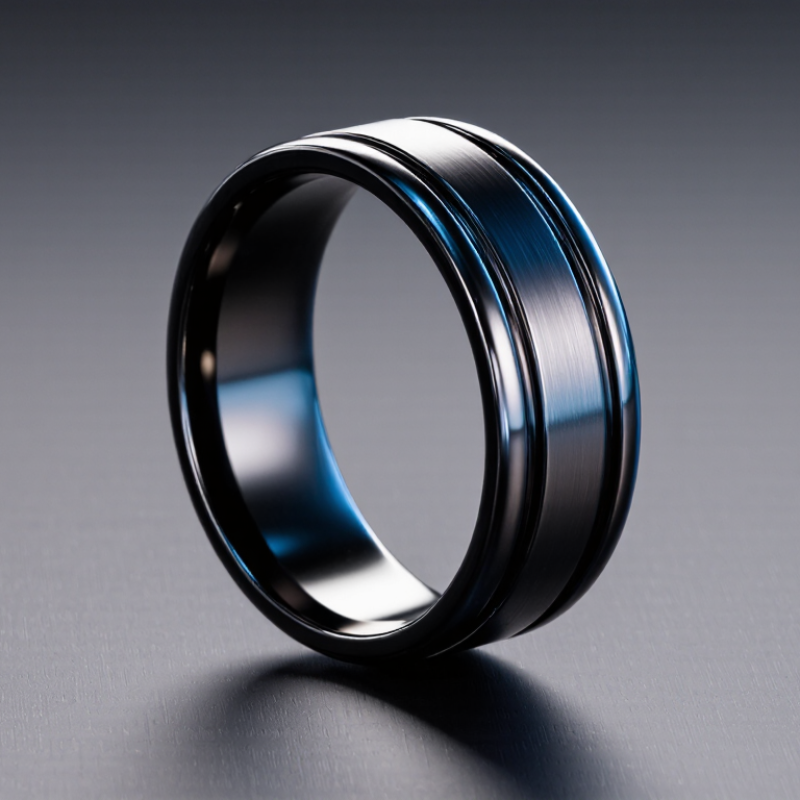
Zirconium rings are made from a durable metal used in industrial settings, then finished for jewelry. In its natural state, zirconium is usually a pale gray. Heating the surface creates a dark oxide layer that gives many rings their deep black color. It feels lighter than many people expect. The black finish is not paint, but it can still show wear. A sharp impact or repeated abrasion may expose lighter metal beneath it.
Zirconium resists corrosion and is generally comfortable for everyday wear. Still, “hypoallergenic” should not be treated as a guarantee; check the ring’s exact composition if you have known metal sensitivities. That detail matters. Pay attention to the finish, band width, and inner edge: a smooth, rounded interior can feel better during long hours of wear. Zirconium is difficult to resize, so accurate sizing is especially important. I would not assume every black ring will age in the same way. Ask how its surface was treated, and consider whether small changes in appearance would bother you.
How to Choose the Best Zirconium Ring?
Define Your Style, Color, and Design Preferences
Start with the look you want to see on your hand every day. Zirconium rings can have a bright silver-gray finish or a dark, often blackened surface. A polished band catches light; a brushed finish softens reflections and can make small scratches less noticeable. Try both beside your usual watch or other jewelry. The contrast can surprise you.
Keep the design practical. A narrow, rounded band feels different from a wide, flat one, especially when gripping a steering wheel or carrying groceries. The Knot’s 2024 Jewelry & Engagement Study reported an average engagement-ring spend of about $5,500. That figure covers engagement rings broadly, not zirconium bands, but it shows how personal preferences and budgets vary. Set your own priorities before comparing styles.
Look closely at edges, inner comfort, and finish consistency. Ask how the dark color is produced and what care the maker recommends; surface treatments can wear differently from the underlying metal. Small details matter. I’d be cautious about choosing a dramatic finish from a screen alone. Photos can hide texture, and honestly, I once underestimated how wide a band would feel. Try a similar width in person, if possible, and give your hand a few minutes to adjust.
How to Choose the Best Zirconium Ring?
Choose the Right Ring Width, Profile, and Fit
A zirconium ring should feel comfortable through an ordinary day, not just look balanced in a product photo. Width changes both appearance and feel: a narrow band may suit smaller hands, while a wider band can look more substantial and feel snugger. Try on a few widths if possible. A difference of one or two millimeters can be surprisingly noticeable.
The profile matters, too. A flat exterior creates a crisp, modern line, while a rounded profile tends to look softer. On the inside, a gently curved comfort-fit surface may make a wider ring easier to slide over the knuckle. Still, comfort is personal; some people prefer a simple, flat interior. Check that the ring stays in place without pinching when your fingers bend.
Tips: Measure your finger at the end of the day, when it may be slightly larger, and avoid sizing after exposure to cold. Ask a jeweler to measure both hands, since fingers can differ. If you are between sizes, test the fit over your knuckle and consider seasonal changes. One fitting may not tell the whole story.
| Decision Factor | Common Options | How It Affects the Ring | Practical Selection Tip |
|---|---|---|---|
| Ring width | About 4–5 mm; 6–7 mm; 8 mm or wider | Narrow bands have a lighter, subtler look. Wider bands create a bolder appearance and cover more of the finger. | Compare widths on your hand if possible. Wider bands often feel tighter, so sizing may need professional confirmation. |
| Profile | Flat; slightly rounded; domed | A flat profile has a crisp, modern look. Rounded and domed profiles have softer edges and may feel smoother against adjacent fingers. | Choose based on appearance and comfort. Try the profile on before ordering, especially if you are not used to wearing rings. |
| Inner surface | Standard fit; comfort fit | A comfort-fit interior is gently rounded and can make a ring easier to slide over the knuckle. It does not guarantee a perfect fit. | Ask how the ring is measured and whether the sizing recommendation accounts for its interior shape and width. |
| Finger measurement | Professional sizing; home measurement | Finger size can vary with temperature, time of day, and swelling. Measuring too tightly or too loosely can lead to an inaccurate result. | For the most reliable result, have your finger sized by a qualified jeweler. Measure when your hands are at a normal temperature. |
| Knuckle and fit | Snug but removable; loose; difficult to pass over knuckle | A ring should pass over the knuckle with slight resistance and sit securely at the base of the finger without causing discomfort. | Consider both the knuckle and the base of the finger. If they differ noticeably in size, ask a jeweler about suitable fitting options. |
| Daily comfort | Low-profile; rounded edges; wider band | Edge shape, width, and profile affect how a ring feels during everyday activities. Personal preference and hand shape also matter. | Try wearing a sample ring for a short period, and check comfort while bending your fingers and gripping objects. |
| Material properties | Black zirconium; finished or textured surfaces | Black zirconium rings are typically made from zirconium metal treated to create a dark surface layer. The appearance and finish can vary by construction. | Ask the seller or jeweler about the ring’s construction, finish, care instructions, and whether resizing or repair is available. |
| Final fit check | Secure, comfortable, and removable | A suitable ring should feel comfortable during normal movement and should not cause pain, numbness, or persistent skin indentation. | Recheck the fit after changes in temperature or activity. Seek professional advice if the ring becomes difficult to remove or causes discomfort. |
How to Choose the Best Zirconium Ring?
Compare finish, craftsmanship, and durability—not just the shine in a product photo. A mirror polish reflects light sharply, while a brushed finish softens fingerprints and small scuffs. Ask whether the surface is polished, blasted, or coated; these treatments age differently. NIST Chemistry WebBook data puts zirconium’s melting point at about 1,855°C, but that figure does not measure scratch resistance. A hot-melting metal can still show everyday wear. Look for clean, even edges and a smooth inner curve; rough spots may irritate skin. Small details matter.
Craftsmanship shows in consistency. Check that the finish continues evenly around the band and that the edges feel comfortable when you turn the ring on your finger. Zirconium mineral supply is a separate question: the USGS Mineral Commodity Summaries 2024 estimated world zirconium-mineral-concentrate production at roughly 1.4 million metric tons in 2023. That figure describes raw mineral output, not ring quality or the durability of a finished band. Be cautious of claims that use supply figures as proof of performance. Ask about the ring’s material, finishing process, and care guidance. One honest caveat: dark finishes can reveal bright marks if the surface is scratched. Think about your daily work, too. A ring that looks perfect under store lighting may not stay that way.
A zirconium ring should fit correctly before purchase, since many designs cannot be resized using ordinary jewelry methods. Have a jeweler measure your finger, ideally late in the day, and try the ring over your knuckle. A wide band can feel tighter than a narrow one. Fit matters. The ring should stay on during a gentle shake, yet come off without painful pulling. If you are between sizes, ask the seller about its measurement method and whether exchanges include shipping or fees.
Check care and return terms before ordering. Black zirconium gets its color from a surface oxide layer; deep scratches may expose lighter metal beneath, so avoid abrasive cleaners and follow the maker’s care instructions. Ask whether the warranty covers finish wear, and whether engraving makes a return ineligible. The 2024 Consumer Returns in the Retail Industry report from the National Retail Federation and Happy Returns projected returns at 16.9% of annual retail sales. That figure covers retail broadly, not jewelry alone, but it shows why clear policies matter. Read the fine print. Keep the sizing record and order confirmation; small paperwork is easy to overlook.
Approximate inner diameter for common US ring sizes
Measure carefully and compare your result with the seller’s size chart; conversions can vary slightly. Many zirconium rings cannot be resized, so confirm the seller’s sizing, return, and exchange policies before buying. Follow the seller’s care instructions and avoid abrasive cleaners that may scratch the finish.


