Let’s discuss your container requirements
01708 225350
Call Us
sale@modularmarbles.com
Email Us

7 Sport Floor Buying Tips for Global Buyers?

Buying a Sport Floor is not simply a matter of choosing rubber, vinyl, wood, or polyurethane. Global buyers must connect surface performance with climate, maintenance capacity, user safety, and long-term cost. A floor that feels excellent in a dry showroom may become slippery in humid conditions. That detail is easy to miss.

Industry reports show why this market deserves careful evaluation. Grand View Research identifies sports flooring as a growing global sector, supported by new gyms, schools, fitness centers, and professional venues. Meanwhile, the International Organization for Standardization and EN 14904 emphasize impact absorption, vertical deformation, friction, and ball behavior for indoor sports surfaces. These figures and standards offer direction, but they cannot replace site-specific testing.

Sports-surface consultant Alan James has often stressed, “The surface must suit the sport, the athletes, and the building.” That principle should guide every purchase decision. Buyers need to compare laboratory results, installation records, warranty terms, cleaning requirements, and replacement access. Ask for real project evidence.

The seven tips in this guide examine those practical decisions. They cover surface selection, shock absorption, slip resistance, climate adaptation, certification, maintenance, and total ownership cost. Some recommendations may seem obvious. They are still frequently overlooked.

A perfect Sport Floor does not exist. The right floor depends on honest priorities, local conditions, and disciplined verification before signing a contract.
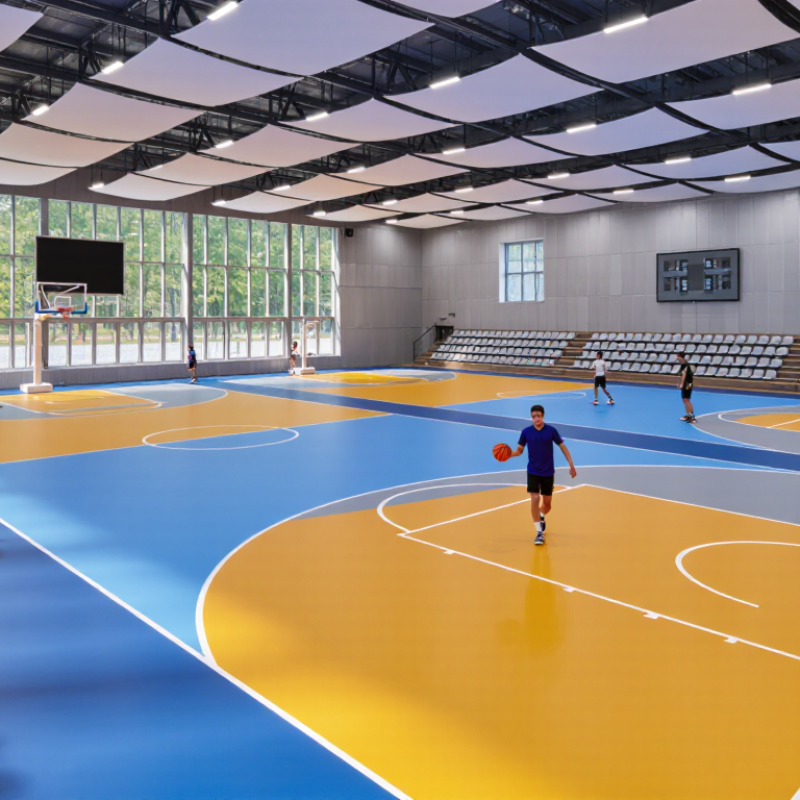
7 Sport Floor Buying Tips for Global Buyers?

Define Your Sport Flooring Requirements and Intended Use

Before comparing sport floors, define how the space will perform each day. A school gym may host basketball, assemblies, and indoor exams. A training studio needs different shock absorption and cleaning tolerance. Write down the users, sports, footwear, equipment, and expected weekly hours. These details prevent an attractive surface from becoming an expensive mismatch. Start there.

Measure the subfloor, room climate, drainage risks, and available installation height. Moisture under concrete can damage adhesives and create uneven movement. In humid regions, ventilation and moisture testing deserve early attention. Ask for test methods, impact ratings, slip resistance data, and maintenance instructions. Request samples, then inspect them under bright light and with actual shoes. Small texture changes can affect pivots, ball response, and comfort. Do not rely on a brochure alone.

Consider athlete safety, but define it precisely. A floor that feels soft may reduce fatigue, yet excessive softness can slow movement. For wheelchair users, young players, or rehabilitation sessions, rolling resistance matters too. Discuss local climate, replacement access, cleaning products, and installer experience with the supplier. Written performance data is useful, but site references reveal practical weaknesses. One project exposed a flaw: our preferred finish showed marks faster than expected. That lesson changed our inspection checklist. Leave room for review before signing.

Compare Flooring Materials, Performance, and Maintenance Needs

7 Sport Floor Buying Tips for Global Buyers

Compare flooring by performance, material, and maintenance rather than appearance alone. The EN 14904 standard specifies 25–75% shock absorption for indoor sports surfaces. It also requires at least 90% ball rebound and commonly measures vertical deformation between 2.3 and 5.0 millimetres. These figures affect player comfort, ball response, and long-term joint stress. Ask for tested results, not vague claims.

Compare wood, PVC, rubber, and polyurethane systems under the same conditions. Wood can offer excellent rebound, but humidity may cause gaps or cupping. PVC is easier to clean, yet seams need careful welding and inspection. Rubber tolerates heavy traffic and absorbs impact well. It may retain rubber marks near basketball courts. Polyurethane systems provide seamless surfaces, though repairs can be difficult to match. Check the subfloor. Small moisture problems can become expensive failures.

Maintenance needs should match local labour, water quality, and cleaning habits. Request a daily cleaning method, approved detergent range, recoating interval, and spare-material plan. EN 14904 testing is useful, but it does not predict every site problem. A dusty sports hall, wet entrance, or poorly drained mop bucket can change performance quickly. ASTM F2772 also evaluates athletic floor properties, so compare both test evidence and installation records. A low purchase price may hide frequent refinishing, specialist labour, or delayed replacement parts. Do not guess. Ask installers to show similar floors after several years.

7 Sport Floor Buying Tips for Global Buyers

Compare shock absorption, ball response, durability, installation flexibility, cleaning needs, repairability, and lifecycle value before selecting a sports floor. The scores below are comparative benchmarks on a 1–10 scale based on common characteristics of widely used sports flooring systems; project specifications and local standards should always be verified.

Check International Safety Standards and Product Certifications

7 Sport Floor Buying Tips for Global Buyers

International safety standards should guide every sports flooring purchase. Requirements differ by country, venue type, and installation location. A school gym may need different performance evidence than a professional training hall. Ask for current test reports covering shock absorption, slip resistance, ball rebound, and surface durability. Do not rely on a sales sheet alone. Ask for evidence.

Check whether an independent laboratory performed the testing. Reports from laboratories accredited to ISO/IEC 17025 usually provide stronger technical confidence. Review the test date, product name, sample thickness, testing method, and report scope. Standards such as EN or ASTM may appear in documentation, but their relevance depends on your market and project specification. A certificate can look impressive and still be irrelevant. Details matter.

Product certifications should also match the exact flooring system, including backing, adhesive, coatings, and seams. Confirm fire performance, emissions, and material safety where local rules require them. Request installation instructions and maintenance limits before signing a contract. In procurement reviews, small details often prevent expensive replacements, especially when floors cross borders. Keep batch records and delivery documents for future checks. No checklist is perfect. I have seen buyers focus on impact ratings while overlooking moisture conditions and subfloor preparation. That mistake can damage performance, even when the product itself passed every test. Reflect on the full installation environment, not only the certificate.

7 Sport Floor Buying Tips for Global Buyers? - Check International Safety Standards and Product Certifications

No. Buying Tip What Global Buyers Should Verify Relevant Standard or Test Method Useful Evidence to Request Why It Matters
1 Match the floor to the sport and venue Confirm whether the system is intended for indoor or outdoor use, the sport played, athlete traffic, footwear type, rolling loads, and expected operating hours. EN 14904 for indoor sports-area surfaces; EN 14877 for synthetic surfaces used in outdoor sports facilities; ASTM F2772 for indoor sports floor systems. Technical data sheet, intended-use statement, system construction drawings, and test reports for the complete floor assembly. A floor designed for the wrong sport may provide unsuitable grip, ball response, durability, or athlete protection.
2 Check shock absorption and vertical deformation Review impact attenuation, area indentation, and vertical deformation values for the full installed system rather than for the top layer alone. EN 14904 specifies performance requirements for indoor sports surfaces; ASTM F2772 includes performance classifications for indoor sports floor systems. Independent laboratory report showing test conditions, specimen build-up, measured values, and applicable classification. Correct shock absorption can help reduce repetitive loading while excessive deformation may affect stability and playability.
3 Verify slip resistance and sports performance Ask for results under dry and, where relevant, contaminated or wet conditions. Also assess ball rebound, rolling behavior, and surface uniformity. EN 14904 includes friction and sports-performance requirements; ASTM F2772 covers relevant performance characteristics for indoor systems. Slip-resistance report, ball-rebound results, surface-uniformity data, and a physical sample or approved mock-up. Balanced traction supports controlled movement without creating excessive sticking or inconsistent ball response.
4 Confirm fire-safety classification Check the classification required by the destination country and building code, including the complete floor build-up, adhesive, underlay, and coating. EN 13501-1 classifies reaction to fire for construction products and building elements in European markets; local codes may require additional tests. Valid fire-test report or classification report identifying the tested product composition and installation method. Fire performance affects approvals, occupant safety, insurance, and the ability to use the floor in public facilities.
5 Review emissions and indoor-air quality Evaluate emissions from flooring, coatings, adhesives, and underlays, especially for enclosed gyms, schools, training centers, and healthcare facilities. EN 717-1 for formaldehyde emission from wood-based panels; ISO 16000 series for indoor-air and emission measurements. Local VOC limits may also apply. Recent laboratory emission report, safety data sheets, VOC statement, and documentation for every component in the system. Lower emissions support healthier indoor environments and help meet green-building or public-project requirements.
6 Check installation, subfloor, and moisture requirements Confirm permitted subfloor flatness, moisture limits, temperature, humidity, expansion joints, drainage, curing time, and approved adhesive or fixing method. Use the applicable national installation code and the floor-system manufacturer’s documented installation specification; test methods vary by substrate and system. Method statement, subfloor inspection checklist, moisture-test procedure, maintenance manual, and installer training or qualification records. Many failures, including bubbling, open joints, and loss of adhesion, result from unsuitable substrate conditions or incorrect installation.
7 Validate durability, maintenance, and documentation Assess wear resistance, indentation recovery, resistance to cleaning chemicals, repairability, spare-part availability, warranty terms, and expected service conditions. Relevant abrasion, indentation, chemical-resistance, and dimensional-stability methods should be stated clearly in the test documentation; requirements depend on flooring type and market. Maintenance schedule, cleaning-chemical compatibility chart, warranty, batch traceability, product data sheet, and after-sales service procedure. Transparent lifecycle information helps control total cost, preserve safety performance, and support future repairs or replacement.

Note: Standards and certification requirements vary by country, building type, sport federation, and project specification. Always confirm the current edition and acceptance requirements with the local authority or project consultant.

Evaluate Installation Conditions, Durability, and Total Costs

7 Sport Floor Buying Tips for Global Buyers?

Evaluate Installation Conditions, Durability, and Total Costs

A sport floor can fail before the first match if the installation site is not ready. Check subfloor flatness, moisture levels, drainage, temperature, and ventilation. Concrete may look dry but still hold damaging moisture. Ask a qualified installer to record test results before shipment. Confirm expansion gaps around walls, columns, and doorways. Small omissions become expensive repairs.

Durability depends on use, not appearance alone. Compare impact resistance, surface wear, slip performance, and ball response. A school gym needs different protection from a professional training hall. Request independent test reports and clear maintenance instructions. Review cleaning chemicals carefully. Some aggressive products can dull the surface or weaken coatings. Safety standards also vary by country, so verify local requirements with a competent inspector.

The purchase price is only one part of the budget. Add freight, import duties, subfloor preparation, installation labor, cleaning equipment, and future repairs. Calculate expected service life under realistic usage. A cheaper floor may need earlier replacement. That is not always true, though. I would avoid trusting broad claims without project references and measurable evidence. Ask for warranty exclusions, repair procedures, and spare material availability. One overlooked detail can change the total cost.

Select a Reliable Global Supplier and Confirm After-Sales Support

Choosing a reliable global sports floor supplier requires more than comparing prices. I have found that product samples, technical documents, and customer references reveal important differences. A trustworthy supplier should explain surface hardness, shock absorption, slip resistance, and installation requirements clearly. Ask for independent test reports when available. Do not accept vague claims.

After-sales support deserves equal attention. Request a written warranty with coverage periods, exclusions, response times, and repair procedures. Confirm whether the supplier provides installation guidance, maintenance instructions, and replacement materials. For overseas projects, clarify shipping responsibility and communication channels. A local service partner can reduce delays, but verify their experience first. Small details matter.

Inspect completed projects through photographs, videos, or direct references. Speak with facility managers about flooring performance after heavy use, not just after installation. A polished sample can hide uneven subfloor preparation. We once trusted attractive samples and overlooked the installer’s training records. That mistake caused minor joint problems later. It changed our checking process. Require a pre-installation checklist, batch inspection, and clear approval points. Keep records of delivery condition and surface measurements. Reliable support is practical, documented, and available when the court is already in use.

Article Source:

We are proud to support

Registered Company Name: Upminster Containers Limited. Registered Address: Mardyke Works, St Mary's Lane, Upminster, Essex RM14 3PA. Registered Company Number: 00940382
Developed & Maintained By Space Rocket Digital.
chevron-down