Let’s discuss your container requirements
01708 225350
Call Us
sale@modularmarbles.com
Email Us

10 Tips for Choosing Carton Flow Racking Systems

Choosing Carton Flow Racking Systems is more than comparing prices or counting storage lanes. The right design can shorten picking routes, improve stock rotation, and reduce unnecessary handling in busy warehouses. However, performance depends on details that are easy to overlook.

A practical evaluation begins with real operating conditions. Measure carton length, width, height, and weight across your active product range. Record the busiest picking hours. Watch how cartons move on sample rollers, especially when loads vary. Small changes in carton surfaces can affect flow, braking, and replenishment speed. This is where warehouse experience matters.

A perfect system is unlikely. Early estimates can be wrong. Product dimensions may change after installation. Therefore, reliable decisions should combine site measurements, supplier specifications, safety guidance, and controlled testing. Ask manufacturers about roller pitch, lane capacity, frame strength, dividers, replenishment access, and maintenance support. Review how the system handles FIFO requirements and different stock turnover rates.

The ten tips in this guide will help you examine these factors clearly. They are designed for warehouse managers, logistics planners, and operations teams seeking practical improvements. Each tip connects equipment choices with daily work, from a picker reaching for a carton to a replenisher loading the rear of a lane. Careful planning can prevent expensive adjustments later. Yet flexibility still matters. Your warehouse will evolve, and the best Carton Flow Racking Systems should support that change rather than restrict it.
10 Tips for Choosing Carton Flow Racking Systems

Define Carton Flow Racking and Its Core Operating Principles

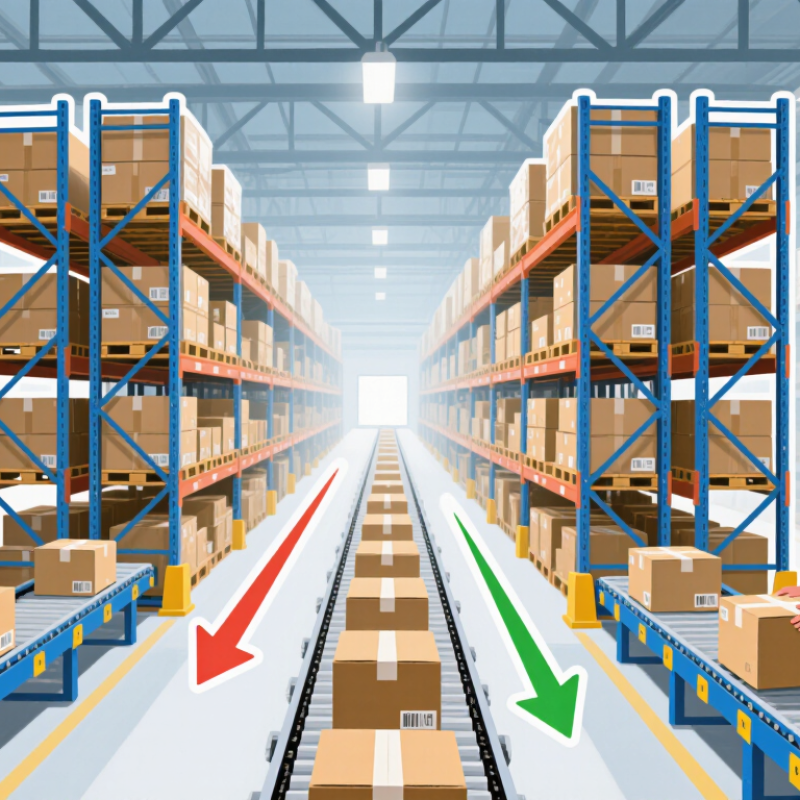
Carton flow racking is a gravity-fed storage system for cartons, totes, or small containers. It uses inclined roller lanes, with products loaded from the replenishment side. Gravity moves each carton toward the picking face. This separates replenishment from picking and supports clear, repeatable order flow.

In daily operation, an employee loads stock at the higher rear position. The carton rolls gently until a brake, divider, or stop holds it safely. A picker removes the oldest accessible carton from the front. The next carton then advances automatically, supporting a practical first-in, first-out sequence. However, this sequence depends on correct loading discipline. Roller pitch and wheel spacing must match the carton base. A poor match can create wobbling, jams, or unexpected stopping.

From warehouse observations, performance depends on more than rack geometry. Carton weight, package friction, lane angle, and replenishment habits all affect movement. Too much slope can cause impact damage. Too little can leave cartons stranded. Operators should test representative loads before approving a layout. That step is often skipped. It should not be. Routine checks should cover brakes, rollers, labels, and frame connections. A useful design also leaves enough hand clearance and keeps heavy cartons at manageable heights. Even experienced teams can misjudge seasonal packaging changes, so the system deserves another review when carton dimensions change.

10 Tips for Choosing Carton Flow Racking Systems

Define Carton Flow Racking and Its Core Operating Principles

Carton flow racking uses inclined roller or wheel lanes so cartons move forward by gravity from the replenishment side to the picking side. The system supports FIFO rotation, separates loading from picking, and keeps fast-moving cartons accessible at the front of each lane.

Typical planning reference ranges: roller pitch, lane slope, carton load, and lane depth vary according to carton dimensions, weight, packaging stiffness, and equipment design. Confirm final specifications through testing and supplier engineering review.

Assess Inventory, Carton Sizes, and Required Storage Capacity

Choosing carton flow racking starts with inventory, not available floor space. Review SKU counts, daily order lines, replenishment frequency, and seasonal peaks. Fast-moving cartons need short travel paths and dedicated lanes. Slow movers may share lanes when dimensions remain compatible. A recent assessment exposed an overlooked issue: twelve cartons looked similar, yet their heights varied by 35 millimeters. That difference caused poor roller contact and unstable presentation. Measure real cartons, not catalog samples. Record length, width, height, weight, and packaging stiffness for every important SKU.

Carton size determines lane width, roller pitch, divider spacing, and usable depth. Heavy cartons require stronger rollers and closer support points. Soft packages need careful handling because edges can snag between rollers. Test several full cartons in a sample lane. Observe picking posture, carton travel, and replenishment effort. Small adjustments matter. A lane 50 millimeters too narrow can slow picking and damage packaging. Adjustable components provide flexibility, although excessive adjustment can complicate maintenance and training.

Required storage capacity should reflect current stock, forecast demand, and replenishment rules. Calculate positions by SKU, then add reserve capacity for promotions and delayed deliveries. Avoid filling every lane to its theoretical limit. A 10 to 15 percent allowance often supports safer operation, but demand volatility may require more. Our first estimate was too optimistic because it ignored empty space above irregular cartons. Recheck the plan with actual dimensions, load ratings, and aisle clearances.

Select Rack Dimensions, Roller Types, and Load Specifications

10 Tips for Choosing Carton Flow Racking Systems

Choosing carton flow racking starts with the carton, not the rack. Measure carton width, depth, height, and weight when filled. Then check the clear lane width, frame height, pitch, and operator clearance. Allow space for labels, hand access, and slight carton distortion. Measure twice. A narrow lane may reduce capacity, while an oversized lane can let cartons twist or stop.

Roller selection should match the carton base and picking rhythm. Skate wheels suit firm, smooth cartons with moderate loads. Full-width rollers provide better support for soft, uneven, or heavier cartons. Test several cartons on a sample lane before approving the layout. I have seen small base defects create unexpected friction. Roller pitch matters too. Use closer spacing when cartons have short or flexible bases.

Load specifications require more than reading one weight figure. Calculate the heaviest carton, the number of cartons per lane, and the total rack section load. Confirm the capacity of rollers, supports, frames, and connections. Include impact from replenishment, not only static storage. Keep a practical safety margin. An impressive calculation can still miss real warehouse behavior. Ask an experienced rack engineer to review the figures and site conditions. Inspect the system after installation, especially when carton sizes change.

10 Tips for Choosing Carton Flow Racking Systems - Select Rack Dimensions, Roller Types, and Load Specifications

Tip Selection Factor What to Measure or Define Typical Planning Values Practical Selection Guidance
1 Carton Dimensions Measure the length, width, height, and actual weight of the smallest, largest, and most frequently handled cartons. Carton heights commonly range from 100–600 mm (4–24 in); carton weights often range from 2–25 kg (4–55 lb). Size each lane for the product range, not only the average carton. Allow clearance so cartons do not rub against uprights or adjacent lanes.
2 Rack Depth Match rack depth to the front-to-back carton dimension and the required number of cartons stored in each lane. Typical carton-flow rack depths are approximately 600–1,200 mm (24–48 in), with deeper layouts used for longer cartons or increased lane capacity. Provide enough depth for the required inventory while keeping replenishment and picking access practical.
3 Lane Width Determine the clear internal width needed for one carton or a controlled group of cartons moving side by side. Many carton-flow lanes are approximately 300–900 mm (12–36 in) wide; the exact width depends on carton geometry and product presentation. Use the carton width plus operating clearance. Excessive clearance can allow cartons to rotate or travel unevenly.
4 Roller or Wheel Type Select the conveying surface according to carton bottom quality, load weight, friction, dust, and required movement consistency. Common options include skatewheel rollers for light, rigid-bottom cartons and full-width or segmented cylindrical rollers for heavier or less rigid cartons. Use closely spaced rollers when cartons have uneven bottoms. Wider spacing may be acceptable for rigid cartons with continuous support.
5 Roller Spacing Ensure that the carton remains supported by multiple rollers throughout its travel path. A common planning approach is to maintain at least three points of roller contact under the carton; spacing is often about 75–150 mm (3–6 in), subject to load testing. Reduce spacing for flexible cartons, small cartons, or concentrated loads. Confirm that the leading edge cannot drop between rollers.
6 Lane Slope Set the incline high enough for reliable carton travel but low enough to limit impact, noise, and product damage. Gravity carton-flow lanes commonly use approximately 3–6 degrees of slope, depending on carton weight, surface friction, and roller design. Test the lightest carton first. If it does not move consistently, adjust the slope or roller configuration rather than relying only on heavier cartons.
7 Load per Lane Calculate the combined weight of all cartons stored in one lane, including the maximum replenishment quantity. Light-duty lanes may carry about 45–225 kg (100–500 lb); medium-duty lanes may carry approximately 225–450 kg (500–1,000 lb), depending on design. Use the greater of the calculated operating load or the specified minimum design load. Include dynamic effects caused by carton movement and impact.
8 Beam and Upright Capacity Verify the capacity of beams, frames, supports, lane brackets, and connections for the complete rack configuration. Capacity is configuration-specific and depends on beam span, frame height, steel section, bracing, connection type, and load distribution. Do not use a generic capacity value. Confirm the rack design against applicable local structural and seismic requirements.
9 Carton Stop and Separation Control the speed and position of cartons at the pick face, especially where several cartons may accumulate. Use lane dividers, front stops, braking rollers, separators, or speed-control components selected for the maximum carton weight. The front stop must withstand repeated carton impact. Include an ergonomic access height and enough clearance for safe picking.
10 Testing and Future Capacity Test representative cartons, packaging variations, replenishment methods, and the planned operating rate before final installation. Evaluate the lightest and heaviest cartons, damaged or flexible carton bottoms, peak lane loads, and the intended storage growth period. Reserve capacity for SKU changes and future volume. Inspect rollers, stops, frames, and connections regularly after commissioning.

Planning values are general industry ranges and should be verified through application testing and a qualified rack-system review. Final dimensions and load ratings must be based on the actual cartons, rack configuration, operating conditions, and applicable safety regulations.

Plan Picking Flow, Accessibility, and Workplace Safety

10 Tips for Choosing Carton Flow Racking Systems

Start by mapping picking flow before selecting carton flow racking. Review order history, SKU velocity, carton sizes, and replenishment frequency. Place fast-moving items closest to packing stations. Keep slower products in less accessible lanes. It sounds obvious, but poor slotting creates avoidable walking. Set a slight roller angle and test carton movement with real loads. Choose lane widths that prevent cartons from rubbing or stopping. Separate fragile products from heavy cartons.

Accessibility should guide every shelf height and depth. Keep frequent picks between knee and shoulder level. Leave enough hand clearance for safe gripping. Use clear labels facing the picker, not toward the aisle edge. Replenishment staff need a separate route whenever possible. Otherwise, forklifts and pedestrians may compete for the same space. We once saw a well-organized layout become stressful during peak hours. The plan looked efficient on paper. It was not.

Safety depends on details that drawings often miss. Confirm beam, roller, and frame capacities against actual carton weights. Add end guards where equipment may contact the rack. Keep emergency paths, lighting, and fire equipment unobstructed. Inspect rollers, labels, frames, and connections on a scheduled basis. Train workers to report damaged components immediately. Do not assume a new system is automatically safe. Trial one section during normal and peak shifts before expanding. Record blocked lanes, awkward reaches, and replenishment delays. Those imperfect observations often reveal the most useful design changes.

Compare Installation Needs, Maintenance Costs, and Future Flexibility

Choosing carton flow racking requires more than comparing the purchase price. Installation conditions can change the real budget. Measure aisle widths, floor levels, ceiling clearance, and replenishment access before selecting a layout. A 2024 MHI Annual Industry Report found that 55% of supply chain leaders planned to increase technology investment. That signals a practical concern: today’s rack should not block tomorrow’s automation.

Maintenance costs often hide in small details. Rollers, guides, dividers, and brake components need regular inspection. Dust and damaged cartons can slow product movement within weeks. Ask how quickly parts can be replaced and whether technicians can work without emptying an entire bay. The U.S. Bureau of Labor Statistics reported more than 1,000 fatal work injuries in transportation and material-moving occupations during 2023. This figure does not prove carton flow is unsafe, but it reinforces the need for guarded access and documented inspections.

Future flexibility deserves equal attention. Select adjustable lanes, replaceable rollers, and modular supports where possible. A rack that fits one carton size perfectly may become expensive after a packaging change. I have seen layouts optimized for current demand become awkward storage obstacles later. That mistake is easy to repeat. Compare installation labor, annual replacement parts, inspection time, and relocation requirements over five years, not one quotation.

We are proud to support

Registered Company Name: Upminster Containers Limited. Registered Address: Mardyke Works, St Mary's Lane, Upminster, Essex RM14 3PA. Registered Company Number: 00940382
Developed & Maintained By Space Rocket Digital.
chevron-down