Choosing the right Lamination Machine manufacturer in China requires more than scanning product photos or factory claims. Buyers must examine engineering capability, production records, after-sales support, and application fit. A machine built for flexible packaging may not suit printed electronics, textiles, or solar materials.
This guide introduces ten notable Chinese manufacturers through practical selection criteria. These include laminating width, coating accuracy, heating stability, web tension control, PLC integration, and maintenance access. Real factory details matter. For example, operators should inspect roller alignment, adhesive circulation, drying performance, and emergency-stop systems. A reliable supplier should also provide installation guidance, test samples, spare parts, and clear technical documentation.
Evidence is rarely complete.
The ranking should therefore be viewed as a useful comparison, not an absolute verdict. Public information can change, and some manufacturers disclose more technical data than others. In my experience, a polished website cannot replace a production trial, reference check, or factory audit. Buyers should confirm output speed under real materials, not only brochure specifications. They should also ask about film thickness, solvent or solvent-free processes, energy consumption, and expected maintenance intervals.
The following overview focuses on manufacturers with visible industry experience, product specialization, and verifiable customer-service capabilities. It also highlights potential limitations where available. This balanced approach helps purchasing teams reduce technical risk and identify a Lamination Machine partner that matches their materials, budget, and long-term production plans.
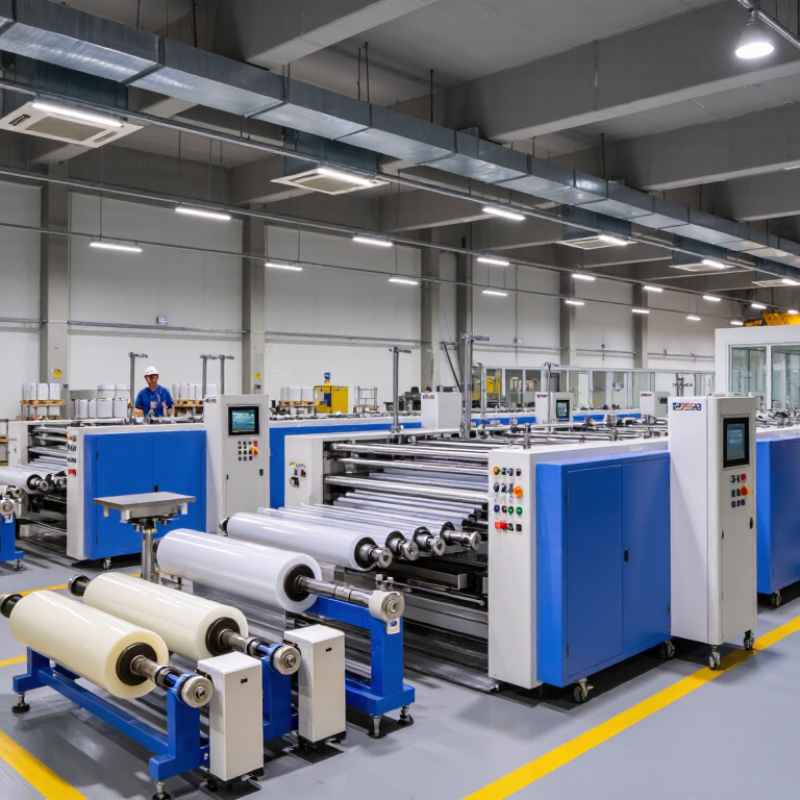
A lamination machine bonds two or more materials into one stable structure.
It may combine film, paper, foil, fabric, or flexible packaging layers. The process improves strength, appearance, moisture resistance, and print protection. In simple terms, the machine applies controlled heat, pressure, or adhesive. Then, it joins the layers while keeping them aligned.
Most systems use unwinders, guiding rollers, a coating or adhesive unit, heated rollers, and a rewinding section.
The base material enters at a steady speed. An adhesive layer is applied evenly across its surface. Heated rollers press the second layer against it. Temperature and pressure activate the bond. Cooling rollers then reduce wrinkles and prevent premature separation. Small changes matter. Excessive heat can distort thin films. Low pressure may create bubbles or weak edges.
Tips:
Check material compatibility before production. Measure roller temperature, tension, and coating weight regularly. Keep rollers clean and inspect them for scratches. During factory testing, operators should compare bond strength, surface smoothness, and waste levels. A fast machine is not always the best choice. Stability often saves more money than speed. Some trial results may look acceptable but fail after storage. That weakness deserves review. Proper ventilation and trained operation also support safer, more reliable production.
Evaluating China’s top ten lamination machine manufacturers requires more than comparing catalog prices. A credible review begins with factory experience, engineering records, and repeatable production results. In practical assessments, I would inspect machines running real film, paper, foil, or flexible substrates. The key details include tension stability, coating uniformity, heating response, and edge alignment. Small variations matter. A machine may look impressive during a short demonstration, yet perform poorly after continuous operation.
Technical evaluation should include usable speed, not only advertised maximum speed. Testers should record output across different materials, temperatures, and web widths. They should measure power use, setup time, waste, noise, and maintenance access. Safety controls deserve equal attention, including guards, emergency stops, thermal protection, and documented procedures. Clear manuals and traceable quality records strengthen confidence. Independent certifications can help, but certificates alone do not prove stable production. This is often overlooked.
After-sales support separates a supplier from a serious manufacturing partner. Evaluation should cover spare-part availability, remote diagnostics, technician response, training, and warranty terms. References from comparable factories provide stronger evidence than polished brochures. However, customer feedback can be uneven. One installation may succeed while another exposes weak commissioning or unclear communication. That uncertainty should remain visible in any top-ten ranking. A fair score combines verified performance, lifecycle cost, service reliability, and honest disclosure of limitations.
This chart presents a practical procurement framework for comparing lamination machine manufacturers. The criteria reflect the factors commonly assessed when selecting industrial equipment, including machine performance, automation, service capability, customization, safety, delivery reliability, and compliance.
China’s top 10 lamination machine manufacturers are best judged by capability, not advertising volume. The strongest suppliers usually specialize in flexible packaging, lithium battery films, solar materials, textiles, labels, medical films, aluminum foil, decorative panels, paper products, or industrial composites. Each segment demands different tension control, coating accuracy, drying capacity, and material compatibility.
In factory evaluations, experienced buyers check machines running real materials, not only polished demonstrations. Look for stable web tension, uniform adhesive coating, low solvent emissions, and clean edge alignment. A reliable manufacturer should provide trial production, measurable output data, installation support, and operator training. Spare rollers and sensors also matter. Downtime is expensive.
The most convincing suppliers disclose technical limits clearly. They explain maximum web width, production speed, curing conditions, and acceptable material thickness. Some leading manufacturers offer customized unwinding systems, automatic register control, and online defect inspection. Others compete through simpler structures and easier maintenance. That difference is important for smaller plants.
A ranking can still be imperfect. Public information often favors large exporters and overlooks capable regional factories. Buyers should verify references, factory capacity, quality records, and after-sales response before choosing among China’s top 10 lamination machine manufacturers. A video call is useful, but an on-site test is stronger evidence.
China’s leading lamination machine manufacturers serve more than conventional packaging. Their equipment covers dry lamination, solventless lamination, extrusion coating, thermal bonding, and specialty film processing. These systems commonly handle PET, BOPP, PE, aluminum foil, paper, nonwoven fabrics, and battery films. Smithers estimates the global flexible packaging market reached about USD 248 billion in 2023. That demand encourages suppliers to improve coating accuracy, web tension control, curing speed, and energy efficiency.
The main customer industries include food packaging, pharmaceutical packaging, labels, textiles, electronics, solar modules, and lithium-ion batteries. Battery production needs extremely clean surfaces and stable adhesive distribution. According to the International Energy Agency, global electric-vehicle battery demand exceeded 750 GWh in 2023, rising by roughly 40 percent. This growth supports demand for precision laminators used with pouch cells and protective films. Solar manufacturers also require uniform encapsulation and low-defect bonding across wide web materials.
Modern machines increasingly combine automatic viscosity control, corona treatment, infrared drying, online inspection, and production data tracking. Some suppliers offer solventless designs to reduce emissions and operating costs. The technology sounds complete. It is not always simple. Small differences in film tension can create wrinkles, bubbles, or weak seals. Buyers should verify trial results, maintenance response, spare-part availability, and compliance records. A fast machine is not necessarily a reliable machine. Real performance depends on materials, operators, humidity, and process discipline.
When comparing China’s top ten lamination machine manufacturers, buyers should assess more than price and catalog photos. Check the machine’s working width, lamination speed, heating method, substrate range, and control accuracy. Ask for test samples using your actual film, paper, fabric, or board. A factory that explains material limits clearly is often more reliable than one promising unlimited performance.
Tips: Request a detailed quotation, layout drawing, utility list, and spare-parts schedule. Verify certifications, quality-control procedures, installation support, and operator training. Speak with recent customers about delivery accuracy and after-sales response times. Inspect welds, rollers, wiring, and safety guards during a factory visit or live video inspection.
Review the warranty carefully. Does it cover heating elements, motors, sensors, and software? Ask how quickly replacement parts can arrive. Compare total ownership costs, including energy use, maintenance, shipping, and commissioning. A lower purchase price may hide expensive downtime. I have seen buyers focus too heavily on maximum speed, while stable tension control mattered more in daily production. That mistake is easy to repeat. Also check whether the supplier can modify unwinding units, adhesive systems, or curing sections without weakening machine stability. Small details matter.


